Discover the Divine Image Within
Imago Dei: Understanding Our True Identity
Explore the profound concept of Imago Dei, the belief that humanity is created in the image of God, and its implications for our lives today.

Explore Our Featured Articles on Imago Dei
The Image of God: What Imago Dei Really Means for Us Today
The Image of God: What Imago Dei Really Means for Us TodayWe've all stood in front of a mirror at some point and wondered about our reflection. But have you ever stopped to think about what it means to be made "in the image of God"? It's one of those theological...
A Biblical Refutation of Paedobaptism
Introduction
Greg Price, a prominent Reformed theologian, has articulated what many consider to be the strongest case for paedobaptism (infant baptism) from a covenantal perspective. His arguments rest primarily on the assumption of covenant continuity—that God’s command to apply the covenant sign to infants in the Old Testament (circumcision) continues in the New Testament (baptism), merely with a different sign. However, when examined against the clear teaching of Scripture, particularly the book of Hebrews, these arguments collapse under the weight of biblical revelation.
This article will examine Price’s main arguments point by point, demonstrating how each contradicts the explicit teaching of the New Testament. More importantly, we will show how the entire argument of the book of Hebrews systematically dismantles the theological foundation of paedobaptism.
Greg Price’s Main Arguments for Paedobaptism
The Foundation: Covenant Continuity
Price’s arguments can be summarized in fifteen main points:
1. 1. Covenant continuity – God’s command to administer the covenant sign to children (Genesis 17:9-14) has never been repealed in Scripture
2. 2. Everlasting covenant – The Abrahamic covenant is described as “everlasting” and applies to believers and their descendants
3. 3. One covenant of grace – There are not two different covenants (Old and New) differing in substance, but one covenant under various dispensations
4. 4. Baptism replaces circumcision – Baptism is the New Testament equivalent of Old Testament circumcision as the covenant sign
5. 5. Same covenant recipients – Just as circumcision was given to Abraham’s children, baptism should be given to believers’ children
6. 6. Covenant children belong to God – Children of believers are God’s by covenant (Ezekiel 16), not merely the parents’ possession
7. 7. Household baptisms – New Testament household baptisms imply infant inclusion
8. 8. “Holy children” – 1 Corinthians 7:14 indicates children of believers are set apart as holy
9. 9. Old Testament authority – The Old Testament remains authoritative for Christian faith and practice
10. 10. Visible church membership – The visible church consists of all who profess true religion “together with their children”
11. 11. Covenant keeping – Baptizing covenant children is obedience to God’s unrepealed command
12. 12. Presumed continuity – God’s commands remain binding until explicitly repealed by Scripture
13. 13. Rejects believer-only baptism – The Anabaptist position wrongly excludes covenant children from covenant blessings
14. 14. Denies perfectionism – Rejects the idea that only the “truly converted” should be in the visible church
15. 15. Paedobaptism was universal Reformed practice – Not a Catholic leftover but the practice of all Reformed churches
Biblical Refutation of Each Argument
1. Covenant Continuity – The Command Has Never Been Repealed
The Argument: God commanded circumcision for covenant children in Genesis 17, and this command remains binding until explicitly repealed.
The Refutation: Colossians 2:11-12 (LSB) explicitly addresses this:
“in whom you were also circumcised with a circumcision made without hands, in the removal of the body of the flesh by the circumcision of Christ; having been buried with Him in baptism, in which you were also raised up with Him through faith in the working of God, who raised Him from the dead.”
This passage reveals that circumcision is now “made without hands”—a spiritual reality, not a physical ritual applied to infants. The parallel drawn is to burial and resurrection “through faith,” which infants cannot exercise. The command hasn’t merely continued with a different sign; it has been transformed into something fundamentally different—a spiritual circumcision of the heart that occurs through faith.
2. The Everlasting Covenant Applies to Physical Descendants
The Argument: The Abrahamic covenant is called “everlasting” and includes descendants, therefore believers’ children should receive the covenant sign.
The Refutation: Romans 9:6-8 (LSB) destroys this argument:
“But it is not as though the word of God has failed. For they are not all Israel who are descended from Israel; nor are they all children because they are Abraham’s seed, but: ‘IN ISAAC YOUR SEED SHALL BE CALLED.’ That is, it is not the children of the flesh who are children of God, but the children of the promise are regarded as seed.”
Paul explicitly rejects physical descent as the basis for covenant membership. Being Abraham’s physical descendant does not make one a covenant child. The “everlasting” nature of the covenant refers to its permanence, not to automatic inclusion of physical descendants. The true seed are “children of the promise”—those who have faith like Abraham, not those merely born to believing parents.
3. One Covenant of Grace Under Various Dispensations
The Argument: There is one covenant of grace that continues from the Old Testament to the New, merely under different administrations.
The Refutation: Hebrews 8:6-7, 13 (LSB) contradicts this directly:
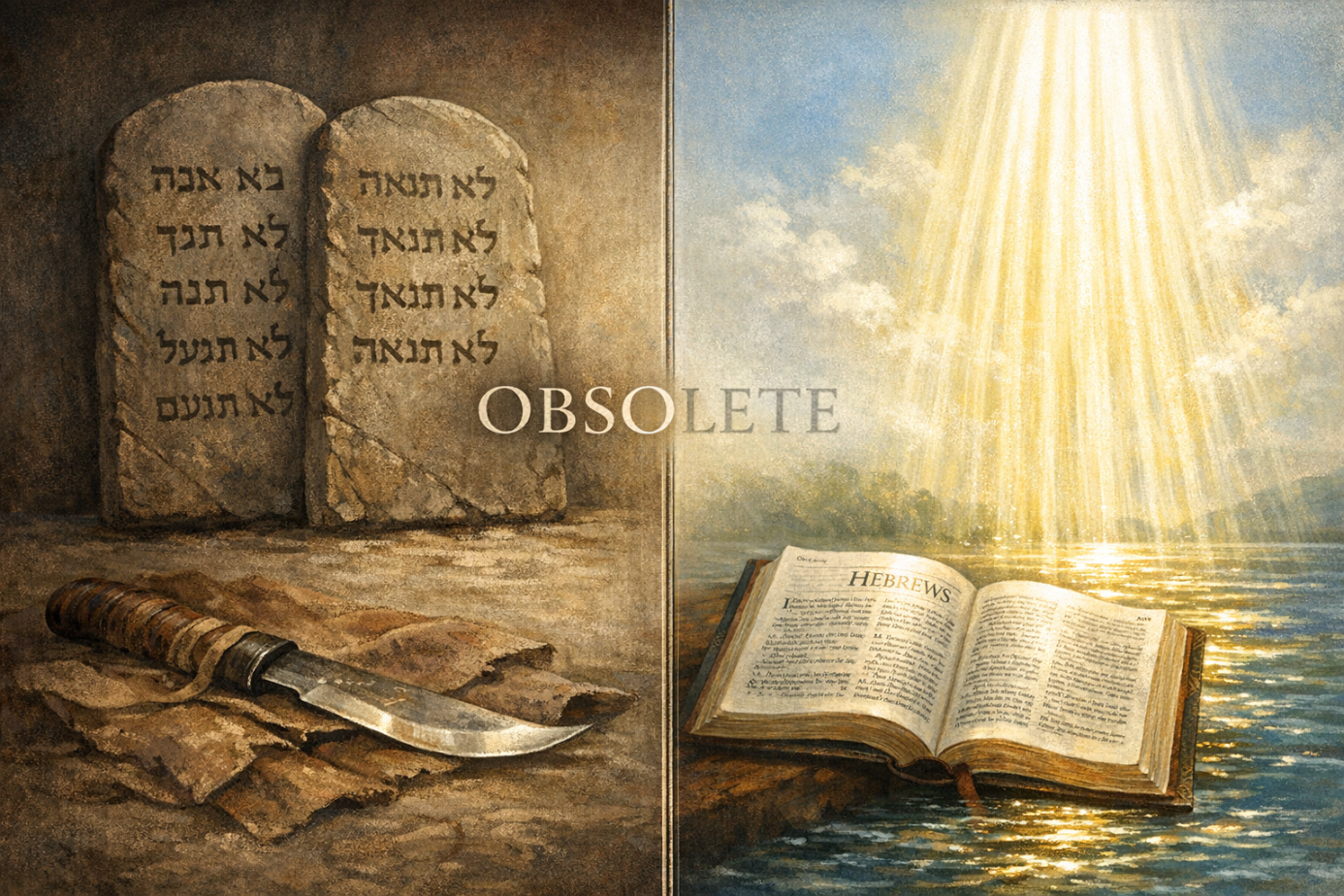
“But now He has obtained a more excellent ministry, by as much as He is also the mediator of a better covenant, which has been enacted on better promises. For if that first covenant had been faultless, there would have been no occasion sought for a second… When He said, ‘A new covenant,’ He has made the first obsolete. But whatever is becoming obsolete and growing old is ready to disappear.”
Scripture explicitly calls it a “new” covenant, not merely a different “dispensation” of the same covenant. The old covenant is declared “obsolete” and “ready to disappear.” The word “better” indicates qualitative superiority, not mere administrative difference. If the new covenant operated on the same principle as the old (giving signs to physical descendants), where would the “better promises” be?
4. Baptism Replaces Circumcision as the Covenant Sign
The Argument: Since baptism is the New Testament equivalent of circumcision, and circumcision was given to infants, baptism should be given to infants.
The Refutation: While Colossians 2:11-12 connects circumcision and baptism, the nature of each differs fundamentally. Consider the contrasts:
Circumcision was:
• Physical, performed on unconscious infants
• Entry into ethnic Israel
• Required no faith from the recipient
• A sign of the old covenant
Baptism in the New Testament is:
• Connected to repentance and faith (Acts 2:38)
• Entry into the spiritual body of Christ
• Administered after confession of faith
• A sign of the new covenant
Acts 8:36-37 (LSB) demonstrates the pattern:
“As they went along the road they came to some water; and the eunuch said, ‘Look! Water! What prevents me from being baptized?’ And Philip said, ‘If you believe with all your heart, you may.’ And he answered and said, ‘I believe that Jesus Christ is the Son of God.'”
Faith is the prerequisite for baptism. The connection to circumcision is spiritual, not procedural.
5-6. Same Covenant Recipients / Covenant Children Belong to God
The Argument: Just as Abraham’s children received circumcision, believers’ children should receive baptism. Ezekiel 16 shows that covenant children belong to God.
The Refutation: Galatians 3:26-29 (LSB) redefines who the covenant recipients are:
“For you are all sons of God through faith in Christ Jesus. For all of you who were baptized into Christ have clothed yourselves with Christ. There is neither Jew nor Greek, there is neither slave nor free man, there is neither male nor female; for you are all one in Christ Jesus. And if you belong to Christ, then you are Abraham’s seed, heirs according to promise.”
Covenant membership is “through faith in Christ Jesus,” not through physical birth. The “seed” are those who “belong to Christ.” Furthermore, Ezekiel 16 is addressed to national Israel under the old covenant, not to New Testament family units. The context is God’s covenant with the nation. Ezekiel 18:20 emphasizes individual accountability: “The person who sins will die. The son will not bear the iniquity of the father.”
7. Household Baptisms Imply Infant Inclusion
The Argument: The New Testament records several household baptisms, which must have included infants.
The Refutation: Every household baptism in Scripture follows a statement of faith by the head of household. No passage explicitly mentions infants. Consider the evidence:
Acts 16:31-34 (Philippian jailer): “They said, ‘Believe in the Lord Jesus, and you will be saved, you and your household’… and he rejoiced greatly, having believed in God with his whole household.” The entire household believed.
Acts 16:14-15 (Lydia): “The Lord opened her heart to respond to the things spoken by Paul… she and her household were baptized.” Her heart was opened to respond—indicating faith preceded baptism.
1 Corinthians 1:16 (Stephanas): 1 Corinthians 16:15 clarifies “the household of Stephanas… they have devoted themselves for ministry to the saints”—indicating believers, not infants.
The consistent pattern is: hearing → believing → baptism. Not a single passage explicitly mentions an infant being baptized.
8. “Holy Children” in 1 Corinthians 7:14
The Argument: Paul calls the children of believers “holy,” indicating covenant membership requiring baptism.
The Refutation: The context is about marriage to unbelievers, not baptism. 1 Corinthians 7:14 (LSB) states:
“For the unbelieving husband is sanctified through his wife, and the unbelieving wife is sanctified through her believing husband; for otherwise your children are unclean, but now they are holy.”
If “holy” means “covenant member requiring baptism,” then the unbelieving spouse is also “sanctified” and should be baptized without faith—which is absurd. “Holy” here means “set apart” in a household sense, not regenerate or requiring baptism. The children are in a privileged position of being raised in a Christian home, but this does not automatically make them covenant members requiring the covenant sign.
9-12. Old Testament Authority and Presumed Continuity
The Argument: The Old Testament remains authoritative, and God’s commands continue until explicitly repealed. Therefore, we should presume continuity.
The Refutation: Credobaptists fully affirm Old Testament authority (2 Timothy 3:16-17). The question is proper interpretation and application under the new covenant. The entire book of Hebrews argues against presumed continuity:
Hebrews 7:12 (LSB):
“For when the priesthood is changed, of necessity there takes place a change of law also.”
The burden of proof is on showing New Testament warrant for a practice, not assuming Old Testament practices continue unchanged. The new covenant brings fundamental change, not mere administrative adjustment.
13. Believer-Only Baptism Excludes Covenant Children
The Argument: The credobaptist position wrongly excludes covenant children from covenant blessings.
The Refutation: Every explicit baptism in Acts follows the same pattern. The evidence is overwhelming:
• Acts 2:38 – “Repent, and each of you be baptized”
• Acts 8:12 – “when they believed Philip… they were being baptized, men and women alike”
• Acts 8:36-38 – “If you believe… I believe… he baptized him”
• Acts 18:8 – “many of the Corinthians when they heard were believing and being baptized”
• Acts 19:4-5 – “John baptized with the baptism of repentance, telling the people to believe… When they heard this, they were baptized”
The New Testament does not exclude covenant children; it redefines who covenant children are—those who have faith in Christ, not those merely born to believing parents.
The Book of Hebrews: A Systematic Refutation of Paedobaptism
While individual passages contradict specific paedobaptist arguments, the book of Hebrews presents a comprehensive theological framework that systematically dismantles the entire foundation of infant baptism. The central thesis of Hebrews is that the New Covenant is fundamentally superior to the Old—not merely a continuation with different signs.
The Central Problem: The Old Covenant Failed Because of External Ritual Without Heart Change
Hebrews 8:8-9 (LSB):
“For finding fault with them, He says, ‘BEHOLD, DAYS ARE COMING, SAYS THE LORD, WHEN I WILL ESTABLISH A NEW COVENANT WITH THE HOUSE OF ISRAEL AND WITH THE HOUSE OF JUDAH; NOT LIKE THE COVENANT WHICH I MADE WITH THEIR FATHERS ON THE DAY WHEN I TOOK THEM BY THE HAND TO LEAD THEM OUT OF THE LAND OF EGYPT; FOR THEY DID NOT CONTINUE IN MY COVENANT, AND I DID NOT CARE FOR THEM, SAYS THE LORD.'”
The old covenant included physical descendants who received the covenant sign (circumcision) but had no heart change. They were covenant members externally but not internally. This is precisely why God found fault with that covenant. Paedobaptism repeats this exact pattern—giving the covenant sign to those who may not have regenerate hearts, creating a visible church filled with baptized unbelievers.
The New Covenant is ONLY With Those Who Know the Lord
Hebrews 8:10-11 (LSB):
“FOR THIS IS THE COVENANT THAT I WILL COVENANT WITH THE HOUSE OF ISRAEL AFTER THOSE DAYS, SAYS THE LORD: I WILL PUT MY LAWS INTO THEIR MIND, AND ON THEIR HEART I WILL WRITE THEM. AND I WILL BE THEIR GOD, AND THEY SHALL BE MY PEOPLE. AND THEY SHALL NOT TEACH EVERYONE HIS FELLOW CITIZEN, AND EVERYONE HIS BROTHER, SAYING, ‘KNOW THE LORD,’ FOR ALL WILL KNOW ME, FROM THE LEAST TO THE GREATEST OF THEM.”
This is the most devastating passage against paedobaptism in all of Scripture. Notice: “ALL will know Me, from the least to the greatest.” Not “some will know Me and some won’t.” Not “most will know Me.” ALL.
Under the old covenant, you had to teach people to “know the Lord” because many covenant members—circumcised infants who grew up—didn’t know Him. They had the sign but not the reality. The new covenant promises this will NOT happen. ALL covenant members will know the Lord.
Infants do not know the Lord. Therefore, by the explicit definition given in Hebrews 8:11, they are not new covenant members. And if they are not covenant members, they should not receive the covenant sign.
The New Covenant Provides What the Old Could Not: Actual Cleansing
Hebrews 9:13-14 (LSB):
“For if the blood of goats and bulls and the ashes of a heifer sprinkling those who have been defiled sanctify for the cleansing of the flesh, how much more will the blood of Christ, who through the eternal Spirit offered Himself without blemish to God, cleanse your conscience from dead works to serve the living God?”
Old covenant rituals provided external, ceremonial cleansing—”cleansing of the flesh.” New covenant baptism symbolizes actual conscience cleansing through the blood of Christ. This is not something infants experience. To baptize an infant is to give them a sign of something that has not occurred in their life—the cleansing of conscience from dead works.
The New Covenant Requires Faith, Not Physical Descent
Hebrews 3:18-19 (LSB):
“And to whom did He swear that they would not enter His rest, but to those who were disobedient? So we see that they were not able to enter because of unbelief.”
Hebrews 4:2 (LSB):
“For indeed we have had good news preached to us, just as they also; but the word they heard did not profit them, because it was not united by faith in those who heard.”
The Israelites had the covenant sign (circumcision). They were physical descendants of Abraham. They were part of the covenant community. Yet they perished in the wilderness because of unbelief. The word did not profit them because it was “not united by faith.”
The new covenant requires faith that actually unites with the word—something infants cannot do. Hebrews uses the failure of circumcised Israelites as a warning against presuming on covenant status without faith.
The New Covenant Has “Better Promises”
Hebrews 8:6 (LSB):
“But now He has obtained a more excellent ministry, by as much as He is also the mediator of a better covenant, which has been enacted on better promises.”
What are these “better promises”? If the new covenant operates the same way as the old—giving signs to physical descendants regardless of their spiritual state—where is the improvement? The “better promises” include:
• God’s law written on the heart (8:10)
• All covenant members knowing the Lord (8:11)
• Complete forgiveness of sins (8:12)
• Actual cleansing of conscience (9:14)
• Perfection of those who are sanctified (10:14)
None of these promises apply to infants. Paedobaptism makes the new covenant functionally identical to the old, thereby denying the “better promises” that make it superior.
The Old Covenant is “Obsolete”—Not Just Modified
Hebrews 8:13 (LSB):
“When He said, ‘A new covenant,’ He has made the first obsolete. But whatever is becoming obsolete and growing old is ready to disappear.”
The word “obsolete” (Greek: παλαιόω, palaioō) means to make old, to treat as obsolete, to abrogate. This is not the language of mere administrative adjustment. This is the language of fundamental replacement.
The old covenant system—including the principle of including physical descendants automatically based on birth—is obsolete. It is “ready to disappear.” To insist on continuing the practice of giving covenant signs to infants based on physical descent is to cling to a principle that God has declared obsolete.
Access to God Now Requires Personal Faith and Cleansing
Hebrews 10:19-22 (LSB):
“Therefore, brothers, since we have confidence to enter the holy place by the blood of Jesus, by a new and living way which He inaugurated for us through the veil, that is, His flesh, and since we have a great priest over the house of God, let us draw near with a sincere heart in full assurance of faith, having our hearts sprinkled clean from an evil conscience and our bodies washed with pure water.”
“Let us draw near… in full assurance of faith, having our hearts sprinkled clean… and our bodies washed with pure water.” This is a clear reference to baptism, and it describes baptism as following heart cleansing and faith, not preceding it. The order is:
16. 1. Hearts sprinkled clean from an evil conscience
17. 2. Full assurance of faith
18. 3. Bodies washed with pure water (baptism)
Infants have not had their hearts sprinkled clean from an evil conscience. They do not have “full assurance of faith.” Therefore, the washing with pure water (baptism) should not be applied to them.
The Warning Passages Assume Genuine Spiritual Experience
Hebrews contains several severe warning passages (2:1-4; 3:7-4:13; 6:4-8; 10:26-31; 12:25-29). These warnings assume that those in the covenant community have had genuine spiritual experiences:
Hebrews 6:4-6 (LSB):
“For in the case of those who have once been enlightened and have tasted of the heavenly gift and have been made partakers of the Holy Spirit, and have tasted the good word of God and the powers of the age to come, and then have fallen away, it is impossible to renew them again to repentance, since they again crucify to themselves the Son of God and put Him to open shame.”
These people were “enlightened,” “tasted the heavenly gift,” were “partakers of the Holy Spirit,” and “tasted the good word of God.” If paedobaptism is correct, the vast majority of baptized persons never had these experiences. They were baptized as infants and may have never come to faith.
The warnings in Hebrews assume that covenant members have genuine spiritual experience, not just external ritual. This is consistent with credobaptism (baptism following faith) but inconsistent with paedobaptism (baptism preceding and independent of faith).
The Hall of Faith: All Personal Believers
Hebrews 11, the famous “Hall of Faith,” lists example after example of those who personally exercised faith. Abel, Enoch, Noah, Abraham, Sarah, Isaac, Jacob, Joseph, Moses, Rahab—every single example is of personal, exercised faith, not inherited covenant status.
Hebrews 11:6 (LSB):
“And without faith it is impossible to please Him, for he who comes to God must believe that He is and that He is a rewarder of those who seek Him.”
“Without faith it is impossible to please Him.” Not “without covenant status.” Not “without the covenant sign.” Without faith. And “he who comes to God must believe.” Infants do not believe. Therefore, they should not receive the sign of those who have come to God through faith.
Conclusion: The Devastating Implications
The book of Hebrews argues that the new covenant is superior to the old precisely because it is NOT like the old covenant, where:
• Physical descendants received the covenant sign automatically
• Many covenant members did not know God personally
• External ritual did not produce heart change
• Unbelief was rampant among the covenant community
• The covenant sign was given to those who would later apostatize
Paedobaptism recreates every single one of these problems that Hebrews says the new covenant solved. It:
• Gives the covenant sign to physical descendants automatically
• Creates a church full of baptized persons who may not know God
• Applies external ritual without requiring heart change
• Produces baptized unbelievers
• Gives the covenant sign to those who may later apostatize without ever having faith
The entire argument of Hebrews is that the new covenant is better because it is internal, spiritual, and based on actual knowledge of God—not external, ritual, and based on physical descent. Paedobaptism contradicts this at every level.
The Pattern of the New Testament
When we examine the actual practice recorded in the New Testament, we find a consistent, unbroken pattern:
19. The gospel is preached
20. People hear the word
21. The Holy Spirit brings conviction and faith
22. People repent and believe
23. They confess Christ
24. They are baptized
25. They are added to the church
This pattern appears in Acts 2, Acts 8, Acts 10, Acts 16, Acts 18, Acts 19, and throughout the New Testament. Not once is this pattern violated. Not once is an infant baptized. Not once is baptism administered apart from faith.
A Call to Biblical Fidelity
Greg Price’s arguments for paedobaptism, while sophisticated and rooted in a covenantal framework, ultimately fail when examined against the clear teaching of Scripture. They require us to:
• Assume continuity where Scripture declares change
• Infer infant baptism where Scripture never explicitly teaches it
• Ignore the consistent pattern of faith preceding baptism in every New Testament example
• Deny the fundamental superiority of the new covenant as taught in Hebrews
• Recreate the very problems the new covenant was designed to solve
The Reformed tradition has given us many precious truths: the sovereignty of God in salvation, the authority of Scripture alone, justification by faith alone, the glory of God as the ultimate purpose of all things. These truths we must cherish and defend.
But the Reformed tradition is not infallible. Where it contradicts Scripture, we must side with Scripture. The Reformers themselves operated on this principle: Sola Scriptura—Scripture alone. They were willing to break with centuries of tradition when Scripture demanded it.
On the issue of baptism, Scripture is clear: baptism is for those who have repented and believed in Jesus Christ. It is a sign and seal of the new covenant, which is made only with those who know the Lord. It symbolizes the cleansing of conscience that comes through faith in Christ’s blood. It represents burial with Christ and resurrection to new life—realities that occur through faith.
To apply this sign to those who have not repented, have not believed, do not know the Lord, and have not experienced the cleansing of conscience is to misuse the ordinance and to contradict the explicit teaching of the New Testament.
May we have the courage to follow Scripture wherever it leads, even when it means breaking with cherished traditions. May we honor the new covenant by recognizing its fundamental superiority to the old. And may we administer the ordinances of Christ according to His Word, not according to human reasoning or theological systems.
“To the law and to the testimony! If they do not speak according to this word, it is because they have no dawn.” – Isaiah 8:20 (LSB)
Explore Topics on Imago Dei
Biblical Foundations
Delve into the scriptural basis for the Imago Dei and its theological significance.
Christ the Perfect Image
Understand how Christ exemplifies the perfect image of God and what this means for us.
Fall and Distortion
Examine how sin has marred the image of God in humanity and the world.
Restoration in Christ
Learn about the redemptive work of Christ in restoring the Imago Dei.
Human Dignity and Vocation
Explore the connection between the Imago Dei and human worth and purpose.
Marriage, Family, Community
Investigate how the Imago Dei informs relationships and community life.
Worship and Discipleship
Discover how the Imago Dei shapes our worship and spiritual growth.
Technology, AI, and Personhood
Consider the implications of the Imago Dei in the age of technology and artificial intelligence.
Stay Connected with Imago Dei
Join our community to receive thoughtful insights and updates on how the Imago Dei shapes our understanding of humanity and our relationship with God. Sign up for our newsletter and never miss an article or event.
Common Questions About Imago Dei
What does Imago Dei mean?
Imago Dei is a Latin term meaning 'Image of God.' It refers to the belief that humans are created in the image and likeness of God, which is foundational to understanding human dignity and purpose.
Why is Imago Dei important in Christianity?
Imago Dei is crucial because it underscores the inherent value of every person, guiding Christian ethics and the way we relate to one another, reflecting God's love and justice.
How does Imago Dei affect our daily lives?
Recognizing the Imago Dei in ourselves and others encourages us to live with compassion, respect, and responsibility, as we strive to mirror God's character in our actions.
Can Imago Dei be restored after the Fall?
Yes, through Christ's redemptive work, believers are renewed in the image of God, progressively transforming to reflect His glory more fully.
How does Imago Dei relate to human rights?
The concept of Imago Dei provides a theological basis for human rights, affirming that all people deserve dignity and respect, regardless of their status or background.
Take the First Step on Your Journey
Embrace the profound truth of being created in the image of God. Dive deeper into your faith and understanding with our resources designed to enlighten and inspire. Begin your exploration today and see how Imago Dei can transform your perspective and life.